THE INTERPLAY OF METACOGNITIVE BELIEFS AND THREAT MONITORING BIAS IN GENERALIZED ANXIETY DISORDER: A COGNITIVE–ATTENTIONAL PERSPECTIVE
DOI:
https://doi.org/10.71146/kjmr839Keywords:
Generalized Anxiety Disorder, Metacognitive Beliefs, Threat Monitoring Bias, Cognitive–Attentional Syndrome, Attention Bias, Metacognitive Therapy, Anxiety DisordersAbstract
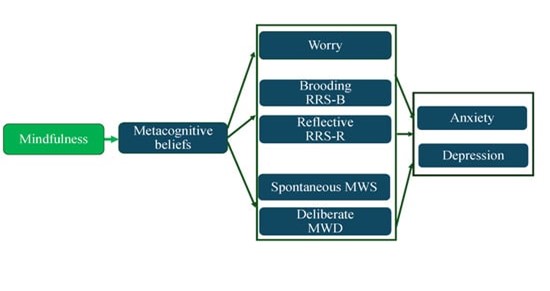
Generalized Anxiety Disorder (GAD) is characterized by excessive and persistent worry accompanied by heightened sensitivity to perceived threats. Contemporary cognitive models suggest that anxiety is not only maintained by negative thought content but also by dysfunctional beliefs about thinking itself, known as metacognitive beliefs. From a cognitive–attentional perspective, these metacognitive beliefs interact closely with attentional processes, particularly threat monitoring bias, to sustain anxiety symptoms. Individuals with GAD often hold negative metacognitive beliefs regarding the uncontrollability and danger of worry, as well as positive beliefs that worry is useful for preventing harm. These beliefs encourage continuous monitoring of internal thoughts and external environments for potential threats. Threat monitoring bias refers to the tendency to preferentially attend to threat-related stimuli, such as negative words or fearful faces. Empirical research using experimental paradigms, including dot-probe and eye-tracking tasks, demonstrates that individuals with GAD show enhanced vigilance toward threatening information compared to non-anxious individuals. The interaction between metacognitive beliefs and threat monitoring bias forms a self-perpetuating cycle, commonly described within the Cognitive–Attentional Syndrome (CAS). It reviews empirical evidence supporting this interaction and discusses its implications for understanding anxiety maintenance. The paper further highlights the relevance of metacognitive therapy as an intervention that targets dysfunctional metacognitive beliefs and attentional control processes, offering a promising approach for reducing chronic worry and anxiety in GAD.
Downloads
Downloads
Published
License
Copyright (c) 2026 Sana Fiaz, Ali Sher Abid Kayani, Aqsa Sahar, Mahnoor Haider Ramay, Iqra Bibi (Author)

This work is licensed under a Creative Commons Attribution 4.0 International License.
How to Cite