INTEGRATED EFFECTS OF MULCHING AND NITROGEN MANAGEMENT ON MAIZE PHENOLOGY AND WEED SUPPRESSION UNDER SEMIARID CONDITIONS
DOI:
https://doi.org/10.71146/kjmr610Keywords:
Maize, mulching, nitrogen management, phenology, weed suppression, semiarid conditionsAbstract
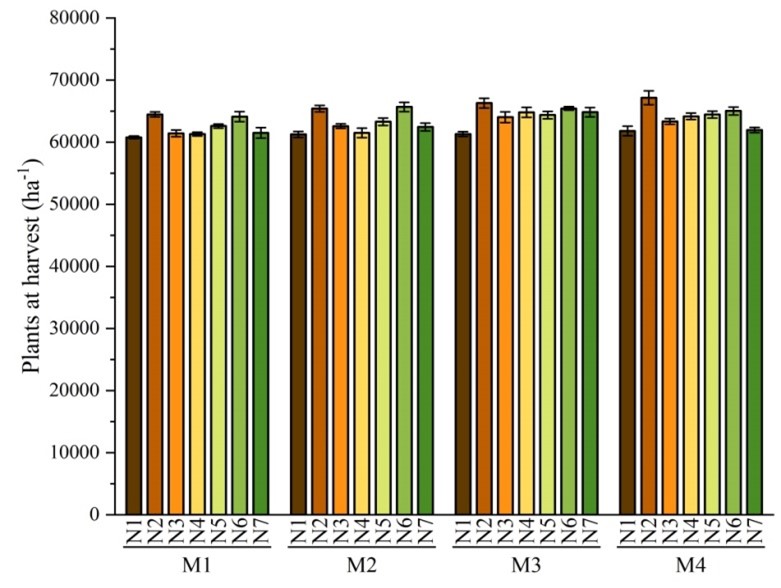
Maize (Zea mays L.) is a major cereal crop in Pakistan, yet its productivity in semiarid regions is constrained by nutrient limitations, weed competition, and poor soil health. This study evaluated the combined effects of mulching sources and integrated nitrogen (N) management on maize phenology, growth, and weed dynamics at the Agronomy Research Farm, University of Agriculture Peshawar, during 2022 and 2023. A split-plot randomized complete block design with three replications was used, with mulching (control, sugarcane bagasse, chickpea residue, live mulch) as the main plot factor and nitrogen regimes (control, 100% urea, 100% farmyard manure, 100% poultry manure, and integrated combinations supplying 150 kg N ha⁻¹) as subplots. Results indicated that live mulch and chickpea residue delayed tasseling and silking, while 100% urea and 50% urea + 50% FYM prolonged physiological maturity. crop height and crop density were greatest under live mulch with 100% urea, reflecting improved crop vigor. Weed suppression was most effective with live mulch, which reduced weed density (15 m⁻²) and biomass compared with control plots (21.7 m⁻² and 191.4 g m⁻² fresh weight). Urea-based treatments promoted higher weed biomass, whereas integrated organic–inorganic combinations moderated weed growth while sustaining crop performance. It is concluded that the integration of live mulch with balanced nitrogen management is an effective strategy to improve crop phenology and suppress weeds under semiarid conditions of Peshawar.
Downloads
Downloads
Published
License
Copyright (c) 2025 Muhsin Khan, Shazma Anwar (Author)

This work is licensed under a Creative Commons Attribution 4.0 International License.
How to Cite