PHOTOCATALYTIC DEGRADATION OF IMIDACLOPRID PESTICIDE USING UV LIGHT, H₂O₂, HNO₃, AND TiO₂ IN AGRICULTURAL SAMPLES FROM SUKKUR AND SHIKARPUR, PAKISTAN
DOI:
https://doi.org/10.71146/kjmr585Keywords:
Imidacloprid, Photocatalysis, UV Degradation, Pesticide Residues, Advanced Oxidation Processes, GC-MSAbstract
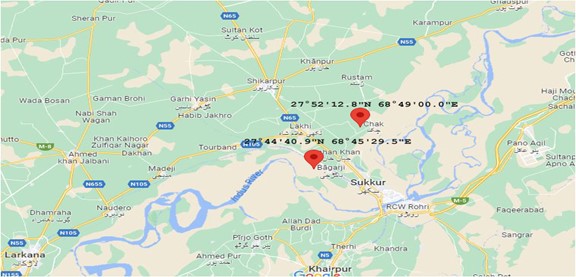
The extensive use of pesticides in agriculture has raised significant environmental concerns due to their adverse effects and persistence on ecosystems and human health. Imidacloprid, a widely used neonicotinoid insecticide, is frequently detected in soil, water, and food commodities, particularly in intensively farmed regions. This study investigates the photocatalytic degradation of imidacloprid under laboratory conditions using ultraviolet (UV) radiation alone and in combination with H₂O₂, HNO₃, and TiO₂ catalysts. Standard solutions (10–50 ppm) were used, and field samples collected from the agricultural districts of Sukkur and Shikarpur, Pakistan, were subjected to photolytic, photo-oxidative, and photocatalytic treatments. UV-Vis spectroscopy was employed to monitor degradation, while GC-MS analysis confirmed the fragmentation of imidacloprid into less toxic by-products such as 6-chloronicotinic acid, desnitro-imidacloprid, and formyl guanidine. Among all treatments, UV/TiO₂ and UV/HNO₃ exhibited the highest efficiency in pesticide degradation compared to UV alone. The findings demonstrate that photocatalytic processes can significantly accelerate the degradation of persistent pesticides in contaminated agricultural environments. This study provides valuable insights into the application of advanced oxidation processes (AOPs) for sustainable pesticide remediation strategies in developing agricultural regions.
Downloads
Downloads
Published
License
Copyright (c) 2025 Sanaullah Ansari, Mushtaque Ali Jakhrani (Author)

This work is licensed under a Creative Commons Attribution 4.0 International License.
How to Cite