ARTIFICIAL INTELLIGENCE BASED CONTROL SYSTEMS FOR POWER ELECTRONICS APPLICATIONS
DOI:
https://doi.org/10.71146/kjmr607Keywords:
Artificial Intelligence, Power Electronics, Control Systems, AI-based Controllers, Industrial AdoptionAbstract
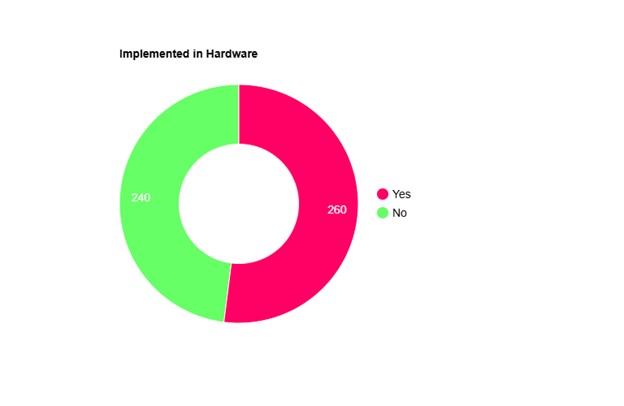
This paper examines the application of Artificial Intelligence (AI)-based control systems. in power electronics, emphasizing their usefulness, stability and implementation. challenges. As AI continues to be integrated into modern engineering very fast, it is important to understand its effects. is important on performance of the system and industrial preparedness. A closed ended, structured questionnaire was used on. a sample of 500 professionals, amongst them researchers, academics, engineers and graduate. students of power electronics and control systems. Data obtained was analyzed. by way of descriptive statistics, by frequencies and percentages to illuminate current trends, Tastes, and impressions. The outcomes show that two-thirds of the participants encountered AI-based control. There are systems with Artificial Neural Networks and Fuzzy Logic being the most commonly used ones. techniques. The main applications became inverter and DC-DC converters. Most participants preferred based and hybrid control strategies. Notably, 68% of Respondents found AI-based controllers more effective than their traditional counterparts, and 70 percent did with regard to their reliability at different load or fault conditions. Despite these advantages, difficulties in the form of incompetence, increased computing demands, and compatibility with remaining barriers are existing systems. In addition, 52% complained of practical. realization in hardware, denoting increasing but tentative use in industry. The study is a contribution to the knowledge of the transformation of AI. power electronics through offering factual experiences on how users experience the power electronics, perceived effectiveness, and industry challenges. The results underline the possibility of AI-based control improvement. productivity and effectiveness as well as further emphasizing that training, cost cutting and enhanced integration plans to particularly assure mass industrial implementation.
Downloads
Downloads
Published
Issue
Section
Categories
License
Copyright (c) 2025 Dr. Saad Khan Baloch, Bibi Zainab, Anbreen Javed, Waqas Ali (Author)

This work is licensed under a Creative Commons Attribution 4.0 International License.
How to Cite