CYBER SECURITY ESSENTIALS FOR SOCIAL WORKERS: MITIGATING AI-DRIVEN SOCIAL ENGINEERING THROUGH SURVEY-BASED BEHAVIORAL INTERVENTIONS
DOI:
https://doi.org/10.71146/kjmr962Keywords:
cyber security, social engineering, Survey-Informed Behavioral Intervention (SIBI), identity trackingAbstract
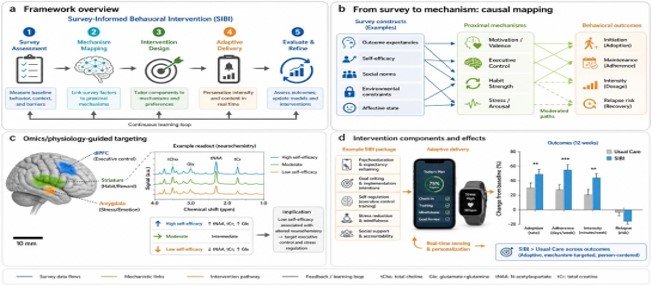
The rapid evolution of artificial intelligence has introduced sophisticated cyber security threats, particularly in the form of AI-driven social engineering. Social workers, who handle highly sensitive and confidential client data, are increasingly targeted by these advanced attacks despite often lacking extensive technical training. This paper explores the intersection of human behavior, survey data analytics, and cyber security to propose a comprehensive framework designed specifically for the social work sector. By leveraging hypothetical survey data to identify psychological vulnerabilities and utilizing AI-simulated phishing campaigns for targeted education, this study outlines a method to transition cyber security awareness from passive compliance to active behavioral change. Ultimately, this research demonstrates that mitigating modern cyber threats in non-technical domains requires a multidisciplinary approach that prioritizes human-centric training alongside technological safeguards.
Downloads
References
Reddy, G. Nikhita, & Reddy, G. J. Ugander (2014). A Study Of Cyber Security Challenges And Its Emerging Trends On Latest Technologies. International Journal of Engineering and Technology - UK ISSN: 2049-3444, Volume 4 No.1 January 2014. https://arxiv.org/pdf/1402.1842v1
Evans, Mark, Maglaras, Leandros A., He, Ying, & Janicke, Helge (2016). Human Behaviour as an aspect of Cyber Security Assurance. https://arxiv.org/pdf/1601.03921v1
Miao, Yuantian, Ruan, Zichan, Pan, Lei, Wang, Yu, Zhang, Jun, & Xiang, Yang (2018). Automated Big Traffic Analytics for Cyber Security. https://arxiv.org/pdf/1804.09023v1
Dang, Duong, Vartiainen, Tero, & Mekkanen, Mike (2024). Cyber Security in Energy Informatics: A Non-technical Perspective. https://arxiv.org/pdf/2405.01867v1
Bada, Maria, Sasse, Angela M., & Nurse, Jason R. C. (2019). Cyber Security Awareness Campaigns: Why do they fail to change behaviour?. International Conference on Cyber Security for Sustainable Society, 2015. https://arxiv.org/pdf/1901.02672v1
Meza, Juan, Campbell, Scott, & Bailey, David (2009). Mathematical and Statistical Opportunities in Cyber Security. https://arxiv.org/pdf/0904.1616v1
Kott, Alexander, Swami, Ananthram, & McDaniel, Patrick (2015). Six Potential Game-Changers in Cyber Security: Towards Priorities in Cyber Science and Engineering. https://arxiv.org/pdf/1511.00509v1
Downloads
Published
Issue
Section
Categories
License
Copyright (c) 2026 Dr Anum Ali, Muhammad Aslam (Author)

This work is licensed under a Creative Commons Attribution 4.0 International License.
How to Cite