PREVALENCE OF DE QUERVAIN’S DISEASE AND RELATED PAIN AND FUNCTIONAL IMPAIRMENT AMONG TAILORS
DOI:
https://doi.org/10.71146/kjmr958Keywords:
De Quervain disease, Finkelstein test, pain, Functional Status, Tendons, TailorsAbstract
BACKGROUND De Quervain’s disease, is a painful condition where the tendons that control your thumb get inflamed and trapped. The tendons include the extensor pollicis brevis and abductor pollicis longus. The pain is increased by thumb abduction, grasping, and ulnar deviation. This study aims to determine the prevalence of DQT among tailors and to assess the associated pain and level of functional impairment affecting their work-related activities.
OBJECTIVE: The study determined the prevalence of DQD and related pain and functional impairment among tailors.
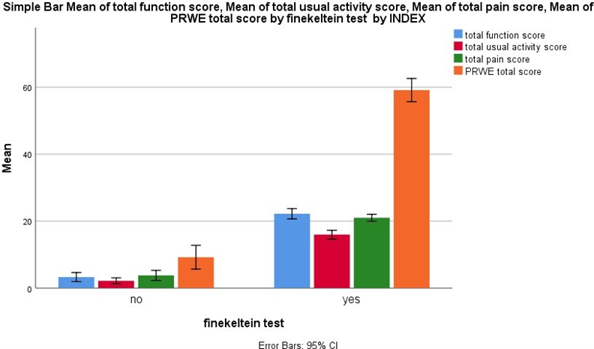
METHODOLOGY: The cross-sectional study was conducted among 175 tailors age range 25-45 from tailors, under non-probability convenience sampling consideration the inclusion and exclusion criteria. Tailors 1 year working experience at least 6-8 hours duration per day include. Data were collected face to face survey through socio-demographic. Patient-Rated Wrist Evaluation (PRWE) questionnaire. Finkelstein test was used to determine the presence of DQD.RESULT: The results show a high prevalence of DQT (77.1%), along a strong association with significant pain and disability. Participants with a positive Finkelstein test had much higher scores for pain (21.04), functional impairment (22.23), usual activity (15.95), and overall PRWE (59.15). These findings indicate a clear link between DQT and Functional impairment among tailors, leading to acceptance of the HO (p < 0.001). Rejecting of the alternative hypothesis (H1).
CONCLUSION: De Quervain’s tenosynovitis is highly prevalent with p-value (<0.001) among tailors and is strongly linked with significant pain and functional limitations that negatively affect both work performance and daily activities.
Downloads
References
1. Mohammadian M. Musculoskeletal disorders prevalence among sewing machine operators of sewing workplaces in Kerman city. Ergonomics International Journal. 2024.
2. Irfan S, Butt M, Ahmed I, Khalid H, Masood R, Zafar A, Ahmad U, REHMAN M. Prevalence of De Quervain’s tenosynovitis among clinical physical therapists in Islamabad: A cross-sectional study. Pakistan Journal of Medical & Health Sciences. 2023 May 1; 17(05):42.
3. Sarfraz M, Hussain A, Ahmed S. Prevalence of De Quervain's tenosynovitis and its association with mobile texting among the university students. 2025.
4. Zulfiqar A, Iqbal K, Malik S, Jameel A, Malik A, Rajput R. Prevalence of De Quervain’s Tenosynovitis and its association with wrist pain and functional status in physical therapists. The Healer Journal of Physiotherapy and Rehabilitation Sciences. 2025 Mar 30; 5(1):314-9.
5. Jamro SA, Sheikh MA, Rajput HI, Chughtai MJ, Amanullah D, Jamroo DA. Work related musculoskeletal disorders among tailors. Int J Pharmaceutical Sci Health. 2018; 2(8):18-25.
6. Maurya P, Priyanka G, Palkar A. Prevalence of De-Quervain’s tenosynovitis in tailors. International Journal of Health Sciences and Research. 2020 Feb; 10(2):2249957.
7. Khan MI, Ahmed S, Ali A. Work-related risk factors contributing to De-Quervain's tenosynovitis among carpenters in Punjab. Am J Health Med Nurs Pract. 2023.
8. Saha A. Prevalence of De-Quervain’s Tenosynovitis among the Tailors in Dhaka, Bangladesh (Doctoral dissertation, Bangladesh Health Professions Institute, Faculty of Medicine, the University of Dhaka, Bangladesh).
9. Hasan M. Characteristics and Relevant Factors of Individuals Diagnosed with De Quervain's Tenosynovitis (DQT) in Bangladesh (Doctoral dissertation, Bangladesh Health Professions Institute, Faculty of Medicine, the University of Dhaka, Bangladesh.).
10. Minahel S, Shahzad A, Shehzad S, Iqbal SA, Saeed A, Pervaiz A, Khaliq F, Hanan A. Prevalence of De-Quervain's Tenosynovitis in Female Tailors in District Wazirabad. European Journal of Health Sciences. 2023; 9(4):22-30.
11. Ilyas U, Rauf A, Maqbool S, Tabassum I, Ahmad A, Saleem M, Perveen W. Comparative Evaluation of Wrist and Hand in Tailors and Embroiderers in Lahore: An Analytical Cross-Sectional Study. Journal of Health, Wellness and Community Research. 2025 Oct 10:e622-.
12. Anwar N, Riaz H, Saeed A, Ashraf F. Frequency of work related musculoskeletal disorders and ergonomic risk assessments among tailors. JPMA. 2020; 70(2164).
13. Meier J. Comparing Occupation Based Intervention with Traditional Therapy for Patients with De Quervain'S Disease (Master's thesis, University of the Witwatersrand, Johannesburg (South Africa)).
14. Mekonnen TH, Yene Alem DG, Geberu DM. Physical environmental and occupational factors inducing work-related neck and shoulder pains among self-employed tailors of informal sectors in Ethiopia, 2019: results from a community based cross-sectional study. BMC Public Health. 2020 Aug 20; 20(1):1265.
15. Williams Y, Ntatamala I, Adams S. Work-related upper limb disorders in health workers: a case of de Quervain’s tenosynovitis with ongoing hand pain. Occupational Health Southern Africa. 2024 Apr 1; 30(2):72-9.
16. Zulfiqar A, Iqbal K, Malik S, Jameel A, Malik A, Rajput R. Prevalence of De Quervain’s Tenosynovitis and its association with wrist pain and functional status in physical therapists. The Healer Journal of Physiotherapy and Rehabilitation Sciences. 2025 Mar 30; 5(1):314-9.
17. Fakoya AO, Tarzian M, Sabater EL, Burgos DM, Marty GI. De Quervain’s disease: a discourse on etiology, diagnosis, and treatment. Cureus. 2023 Apr 24; 15(4).
18. Üstün B, Kennedy C. What is “functional impairment”? Disentangling disability from clinical significance. World Psychiatry. 2009 Jun; 8(2):82.
19. Khillari J, Nagulkar J, Mahajan P. Prevalence of De-Quervains Tenosynovitis in Smart Phone Users in School Going Students Using Finkelstein Test-An Observational Study. Prevalence of De-Quervain's Tenosynovitis in Female Tailors in District Wazirabad. European Journal of Health Sciences. 2023; 9(4):22-30.
20. Asif S, Firdous A, Tahir R, Shabbir A, Rehman A, Qasim MA. Prevalence of carpal tunnel syndrome among tailors: prevalence of carpal tunnel syndrome. Pakistan BioMedical Journal. 2024 Jul 31:24-8.
21. Khan RS, Ali B, Zulaikha Saif DH, Aslam M, Rubab SA, Khizar S. Work-Related Risk Factors Contributing to De-Quervain's Tenosynovitis among Carpenters in Punjab.
22. Sitompul YR. The relationship between types of workers and incidence of carpal tunnel syndrome in tailors at the garment factory North Jakarta. International Journal of Health Sciences and Research. 2022; 12(5):282-9.
23. Aqdas A, Tufail A, Mazhar F, Naz F, Anees A, Tariq R, Ghaffar E, Ahmed B, Bashir S, Naseem S, Irshad U. Prevalence of De Quervain's Tenosynovitis among Weightlifters: Prevalence of De Quervain's Tenosynovitis. Journal of Health and Rehabilitation Research. 2024 Sep 2; 4(3):1-5.
24. Badhon NN. Level of Satisfaction after Receiving Occupational Therapy among Patients with De Quervain’s Tenosynovitis (DQT) from a Selected Rehabilitation Centre (Doctoral dissertation, Bangladesh Health Professions Institute, Faculty of Medicine, the University of Dhaka, Bangladesh).
25. Sarfraz H, Waseem I, Arslan SA, Ahmed A, Adeel B, Rashid I. The prevalence of DQ tenosynovitis and association with mobile texting among the university students: Prevalence of de quervain’s tenosynovitis and its association with mobile texting. Pakistan BioMedical Journal. 2022 Sep 30:41-5
Downloads
Published
License
Copyright (c) 2026 Shagufta, Rehma Abdul Hameed, Okasha Anjum (Author)

This work is licensed under a Creative Commons Attribution 4.0 International License.
How to Cite