CONSISTENCY-BASED EVALUATION OF SHAP AND LIME EXPLANATIONS FOR MACHINE LEARNING-BASED FAKE NEWS DETECTION
DOI:
https://doi.org/10.71146/kjmr937Keywords:
Explainable artificial intelligence, SHAP, LIME, Explanation consistency, Machine learning, Explanation stability, Faithfulness analysisAbstract
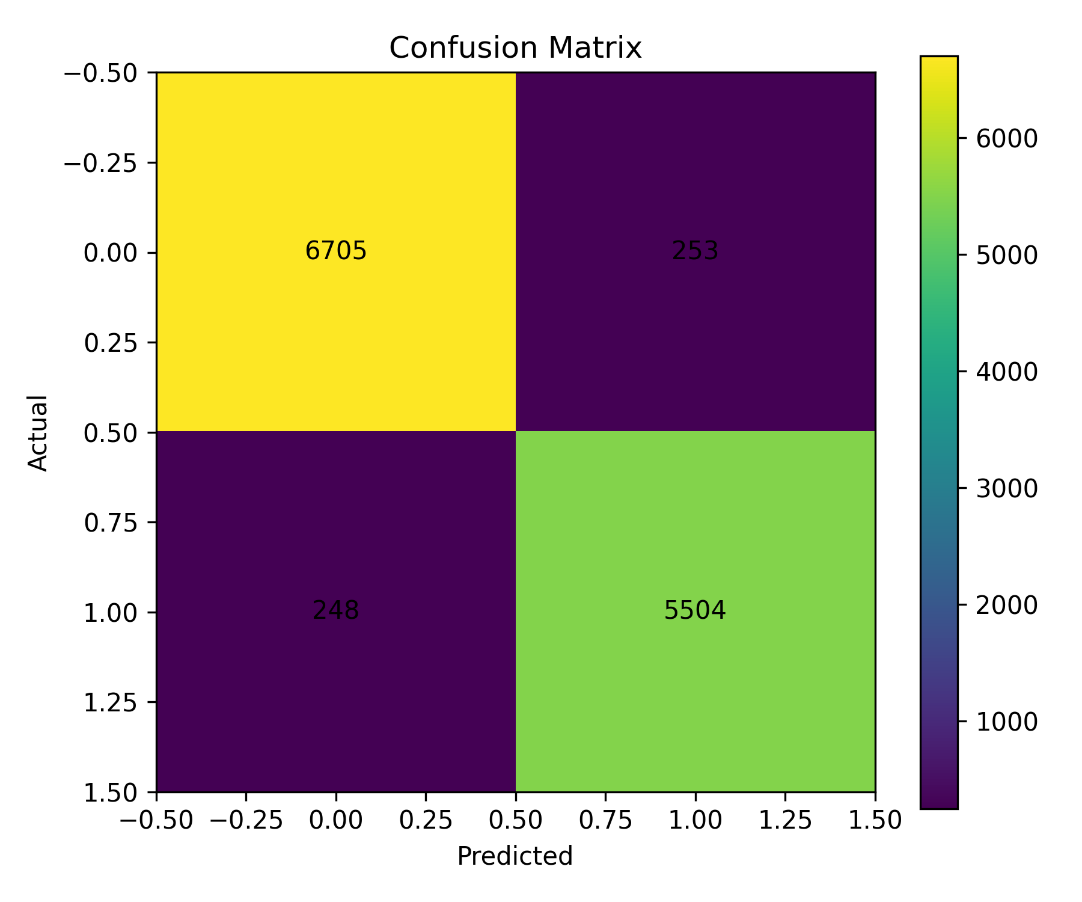
The detection of fake news is a crucial research issue since false and misleading information can easily proliferate in online news and social media. While many machine learning models can perform well in classification, it is hard to trust their predictions when there is no clear and reliable explanation. This paper proposes a consistency based evaluation for SHAP and LIME explanations for fake news detection using machine learning. The study is based on the WEL Fake dataset, which contains fake news (label 0) and real news (label 1). The final dataset after preprocessing has 63,547 articles, 34,788 fake news and 28,759 real news articles. A machine learning pipeline is created based on TF-IDF features, model selection and validation-based tuning of thresholds for unigram textual features. A balanced Logistic Regression classifier with 80,000 TF-IDF features and a tuned threshold of 0.52 is the best model. On the test set, the model achieves 96.06% accuracy, 95.65% F1-score, 99.31% ROC-AUC, 99.18% PR-AUC, and 92.05% Matthews correlation coefficient. The main contributions of this work are not only fake news classification but also the corrected comparison between SHAP and LIME explanations. For a fair comparison between SHAP and LIME, these both are aligned to the same predicted class, and the explanation features are normalized during the experiment at word level before performing evaluation. Top-K overlap ratio, Jaccard similarity, Spearman correlation, Kendall correlation and sign agreement are used to measure the explanation consistency. The overlap ratio, Jaccard similarity, Spearman correlation, Kendall correlation and sign agreement of SHAP and LIME at Top-10 are 76.94%, 64.35%, 80.42%, 70.32% and 98.25%, respectively. LIME repeated-run stability is also measured, and it has a Jaccard stability of 70.62% and a Spearman stability of 88.52%. The faithfulness deletion test also reveals that the average drop in model confidence is 13.94% when the Top-10 SHAP-selected words are deleted, and 12.93% when the LIME-selected words are deleted. The results indicate that SHAP and LIME can offer consistent and meaningful explanations for fake news detection with appropriate class alignment and feature normalization.
Downloads
References
[1] Athira, A. B., et al. (2023). A systematic survey on explainable AI applied to fake news detection. Engineering Applications of Artificial Intelligence.
[2] D’Ulizia, A., et al. (2021). Fake news detection: A survey of evaluation datasets. PeerJ Computer Science.
[3] Galli, A., et al. (2022). A comprehensive benchmark for fake news detection. Complex & Intelligent Systems.
[4] Givisis, I., et al. (2025). Comparing explainable AI models: SHAP, LIME, and their applications. Electronics.
[5] Gongane, V. U., et al. (2024). A survey of explainable AI techniques for detection of fake news and hate speech on social media platforms. Journal of Computational Social Science.
[6] Hermosilla, P., et al. (2025). Explainable AI for forensic analysis: A comparative study of SHAP and LIME. Applied Sciences.
[7] Jadhav, R., et al. (2025). Explainable multilingual and multimodal fake-news detection. Frontiers in Artificial Intelligence.
[8] Kozik, R., et al. (2024). Using XAI to fool a fake news detection method. Computers & Security.
[9] Kukkar, A., & Kaur, G. (2025). AEC: A novel adaptive ensemble classifier with LIME and SHAP-based interpretability for fake news detection. Expert Systems with Applications, 281, 127751.
[10] Lundberg, S. M., & Lee, S.-I. (2017). A unified approach to interpreting model predictions. Advances in Neural Information Processing Systems, 30.
[11] Mouratidis, D., et al. (2025). Machine learning strategies for fake news detection. Information.
[12] Padalko, H., et al. (2024). A novel approach to fake news classification using LSTM-based deep learning models. Scientific Reports / related open-access source.
[13] Rathod, H., Shelar, D., Singh, R., & Modi, N. (2025). Building an explainable and scalable AI system for fake news detection across digital platforms. International Journal of Computer Applications, 187(15), 34–42.
[14] Ribeiro, M. T., Singh, S., & Guestrin, C. (2016). “Why should I trust you?” Explaining the predictions of any classifier. Proceedings of the 22nd ACM SIGKDD International Conference on Knowledge Discovery and Data Mining.
[15] Shahane, S. (2021). WELFake dataset for fake news detection in text data [Data set]. Zenodo.
[16] Shahane, S. (n.d.). Fake news classification / WELFake dataset [Data set]. Kaggle.
[17] Shu, K., Mahudeswaran, D., Wang, S., Lee, D., & Liu, H. (2018). FakeNewsNet: A data repository with news content, social context, and dynamic information for studying fake news on social media. arXiv preprint arXiv:1809.01286.
[18] Tian, Y., et al. (2025). An empirical comparison of machine learning and deep learning methods for fake news detection. Mathematics.
[19] Vimbi, V., et al. (2024). Interpreting artificial intelligence models: A systematic review of LIME and SHAP. Journal of Big Data.
[20] Wang, W. Y. (2017). “Liar, liar pants on fire”: A new benchmark dataset for fake news detection. Proceedings of the 55th Annual Meeting of the Association for Computational Linguistics.
[21] Alshuwaier, F. A., et al. (2025). Fake news detection using machine learning and deep learning: A review. Computers.
[22] Trust-Oriented Explainable AI for Fake News Detection. (2026). arXiv preprint.
Downloads
Published
Issue
Section
Categories
License
Copyright (c) 2026 Hira Junejo, Noor Ahmed Shaikh, Riaz Ahmed Shaikh, Hina Kareem, Manahil Shaikh (Author)

This work is licensed under a Creative Commons Attribution 4.0 International License.
How to Cite