AGENT-MD: A HUMAN-GOVERNED AGENTIC AI FRAMEWORK FOR EXPLAINABLE AND UNCERTAINTY-AWARE MALICIOUS DOMAIN DETECTION
DOI:
https://doi.org/10.71146/kjmr935Keywords:
Agentic AI, calibration, cybersecurity, explainable AI, machine learning, malicious domain detection, risk triage, uncertainty-aware detectionAbstract
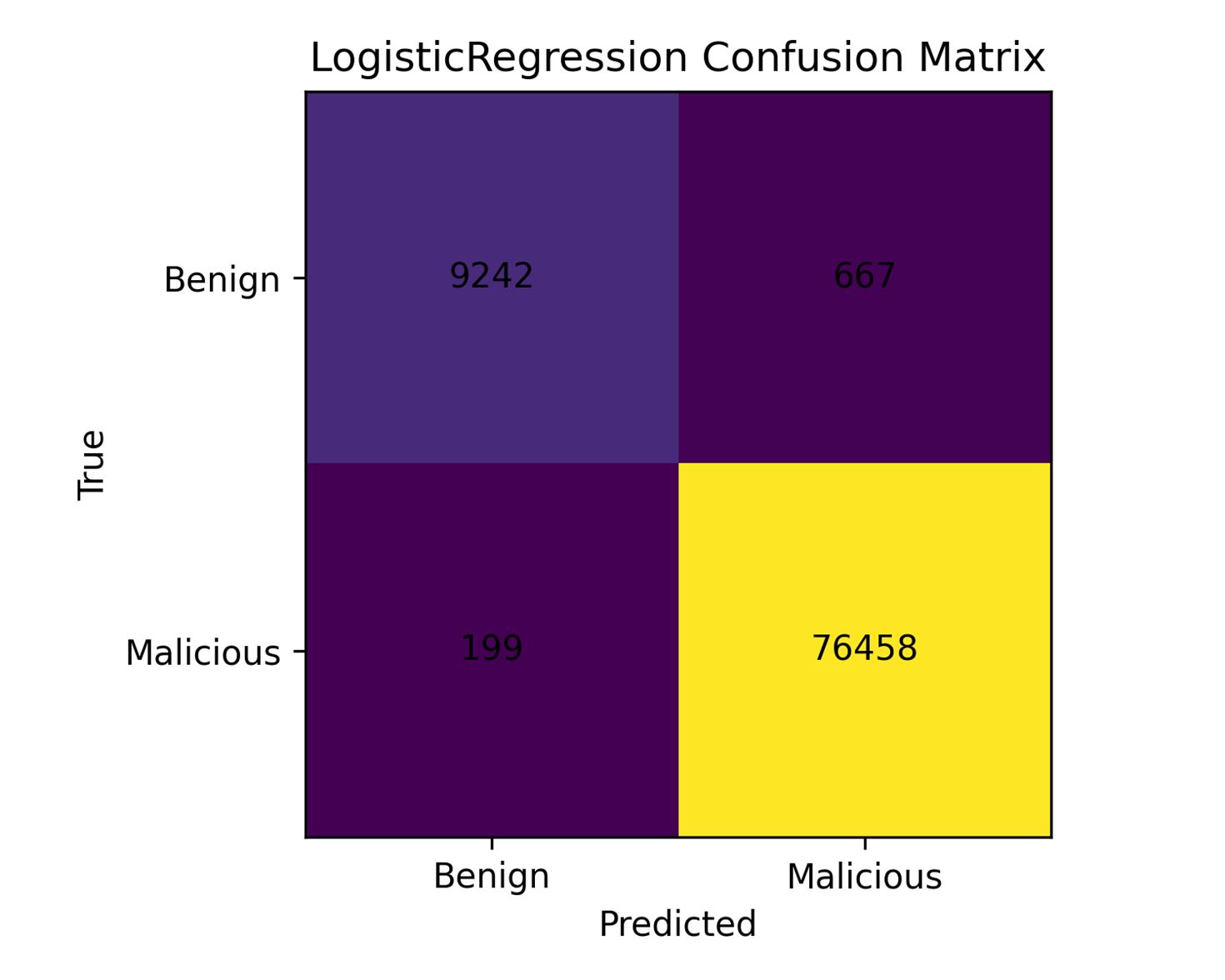
Malicious domains remain a durable part of the infrastructure used for phishing, malware distribution, command-and-control communication, spam campaigns, and online fraud. Prior work on malicious-domain and malicious-URL detection has shown that lexical, structural, DNS, host, and content-derived features can support accurate machine learning models. Yet many systems still end at a binary label. They offer little help with uncertainty, calibration, analyst-facing evidence, risk-level assignment, or governed response. This study presents AGENT-MD, a human-governed agentic AI framework for malicious-domain intelligence. The framework connects feature profiling, supervised detection, validation-based threshold optimization, calibration analysis, uncertainty flagging, risk triage, and response recommendation. After cleaning and duplicate control, the working dataset contains 577,105 records: 66,055 benign and 511,050 malicious samples. The experimental protocol uses 36 numeric domain-derived features and a held-out test set of 86,566 samples. The Logistic Regression detection agent obtains 98.99% accuracy, 99.13% precision, 99.74% recall, 99.44% F1-score, 0.9987 ROC-AUC, 0.9998 PR-AUC, and 0.9500 Matthews correlation coefficient. The confusion matrix reports 76,458 correctly detected malicious domains and 199 false negatives. These results show that malicious-domain detection can be treated not only as static classification, but also as an explainable, uncertainty-aware, and human-governed cyber-threat triage workflow.
Downloads
References
[1] D. Sahoo, C. Liu, and S. C. H. Hoi, “Malicious URL detection using machine learning: A survey,” ACM Computing Surveys, vol. 52, no. 1, pp. 1–37, 2019, doi: 10.1145/3299098.
[2] J. Ma, L. K. Saul, S. Savage, and G. M. Voelker, “Beyond blacklists: Learning to detect malicious Web sites from suspicious URLs,” in Proc. ACM SIGKDD Int. Conf. Knowledge Discovery and Data Mining, 2009, pp. 1245–1254, doi: 10.1145/1557019.1557153.
[3] S. Yadav, A. K. K. Reddy, A. L. N. Reddy, and S. Ranjan, “Detecting algorithmically generated malicious domain names,” in Proc. ACM Internet Measurement Conference, 2010, pp. 48–61, doi: 10.1145/1879141.1879177.
[4] M. Antonakakis et al., “From throw-away traffic to bots: Detecting the rise of DGA-based malware,” in Proc. USENIX Security Symposium, 2012, pp. 491–506.
[5] L. Bilge, E. Kirda, C. Kruegel, and M. Balduzzi, “EXPOSURE: Finding malicious domains using passive DNS analysis,” in Proc. Network and Distributed System Security Symposium, 2011.
[6] H. Le, Q. Pham, D. Sahoo, and S. C. H. Hoi, “URL Net: Learning a URL representation with deep learning for malicious URL detection,” arXiv:1802.03162, 2018.
[7] T. Li, G. Kou, and Y. Peng, “Improving malicious URLs detection via feature engineering: Linear and nonlinear space transformation methods,” Information Systems, vol. 91, Art. no. 101494, 2020, doi: 10.1016/j.is.2020.101494.
[8] J. McGahagan IV, D. Bhansali, C. Pinto-Coelho, and M. Cukier, “Discovering features for detecting malicious websites: An empirical study,” Computers & Security, vol. 109, Art. no. 102374, 2021, doi: 10.1016/j.cose.2021.102374.
[9] M. Aljabri et al., “An assessment of lexical, network, and content-based features for detecting malicious URLs using machine learning and deep learning models,” Computational Intelligence and Neuroscience, vol. 2022, Art. no. 3241216, 2022, doi: 10.1155/2022/3241216.
[10] C. Marques, S. Malta, and J. P. Magalhães, “DNS dataset for malicious domains detection,” Data in Brief, vol. 38, Art. no. 107342, 2021, doi: 10.1016/j.dib.2021.107342.
[11] N. Reyes-Dorta, P. Caballero-Gil, and C. Rosa-Remedios, “Detection of malicious URLs using machine learning,” Wireless Networks, 2024, doi: 10.1007/s11276-024-03700-w.
[12] Y. Tian, Y. Yu, J. Sun, and Y. Wang, “From past to present: A survey of malicious URL detection techniques, datasets and code repositories,” Computer Science Review, vol. 58, Art. no. 100810, 2025, doi: 10.1016/j.cosrev.2025.100810.
[13] M. A trees, A. Ahmad, and F. Alghanim, “Enhancing detection of malicious URLs using boosting and lexical features,” Intelligent Automation & Soft Computing, vol. 31, no. 3, pp. 1405–1422, 2022, doi: 10.32604/IASC.2022.020229.
[14] M. T. Ribeiro, S. Singh, and C. Guestrin, “Why should I trust you? Explaining the predictions of any classifier,” in Proc. ACM SIGKDD Int. Conf. Knowledge Discovery and Data Mining, 2016, pp. 1135–1144, doi: 10.1145/2939672.2939778.
[15] S. M. Lundberg and S.-I. Lee, “A unified approach to interpreting model predictions,” in Advances in Neural Information Processing Systems, vol. 30, 2017, pp. 4765–4774.
[16] C. Guo, G. Pleiss, Y. Sun, and K. Q. Weinberger, “On calibration of modern neural networks,” in Proc. Int. Conf. Machine Learning, 2017, pp. 1321–1330.
[17] B. Zadrozny and C. Elkan, “Transforming classifier scores into accurate multiclass probability estimates,” in Proc. ACM SIGKDD Int. Conf. Knowledge Discovery and Data Mining, 2002, pp. 694–699, doi: 10.1145/775047.775151.
[18] A. Niculescu-Mizil and R. Caruana, “Predicting good probabilities with supervised learning,” in Proc. Int. Conf. Machine Learning, 2005, pp. 625–632, doi: 10.1145/1102351.1102430.
[19] N. Kshetri, “Transforming cybersecurity with agentic AI to combat emerging cyber threats,” Telecommunications Policy, vol. 49, no. 6, Art. no. 102976, 2025, doi: 10.1016/j.telpol.2025.102976.
[20] S. J. Lazer, K. Aryal, M. Gupta, and E. Bertino, “A survey of agentic AI and cybersecurity: Challenges, opportunities and use-case prototypes,” arXiv:2601.05293, 2026.
[21] L. Breiman, “Random forests,” Machine Learning, vol. 45, no. 1, pp. 5–32, 2001, doi: 10.1023/A:1010933404324.
[22] T. Chen and C. Guestrin, “XGBoost: A scalable tree boosting system,” in Proc. ACM SIGKDD Int. Conf. Knowledge Discovery and Data Mining, 2016, pp. 785–794, doi: 10.1145/2939672.2939785.
[23] G. Ke et al., “LightGBM: A highly efficient gradient boosting decision tree,” in Advances in Neural Information Processing Systems, vol. 30, 2017, pp. 3146–3154.
[24] L. Prokhorenkova, G. Gusev, A. Vorobev, A. Dorogush, and A. Gulin, “Cat Boost: Unbiased boosting with categorical features,” in Advances in Neural Information Processing Systems, vol. 31, 2018, pp. 6638–6648.
[25] Y. Li, C. P. Chen, N. Maitlo, L. Mi, W. Zhang, and J. Chen, “Deep neural network-based loop detection for visual simultaneous localization and mapping featuring both points and lines,” Advanced Intelligent Systems, vol. 2, no. 1, Art. no. 1900107, 2020, doi: 10.1002/aisy.201900107.
[26] I. Hyder, R. A. Shaikh, R. H. Arain, Z. Hussain, and B. Raza, “Audit-ready healthcare fraud screening: Split-safe provider aggregation and explainable boosted risk triage,” Southern Journal of Computer Science, vol. 2, no. 1, pp. 18-28, 2026.
[27] P. Mangi, S. Bibi, A. Nawaz, and S. Bibi, “When clients drift: Federated SLA-risk forecasting across unseen 6G RAN regimes,” Spectrum of Engineering Sciences, vol. 4, no. 4, pp. 1015-1023, Apr. 2026, doi: 10.5281/zenodo.19723844.
[28] B. Raza, S. Rajper, N. A. Shaikh, Z. H. Shar, and I. Hyder, “Parsimonious gesture benchmarking for duplicate-contaminated touchless document interaction,” Spectrum of Engineering Sciences, vol. 4, no. 4, pp. 917-932, Apr. 2026, doi: 10.5281/zenodo.19690462.
Downloads
Published
Issue
Section
Categories
License
Copyright (c) 2026 Bushra Shaikh, Khakoo Mal, Noor Ahmed Shaikh, Nizamuddin Maitlo (Author)

This work is licensed under a Creative Commons Attribution 4.0 International License.
How to Cite